
When a tooth is badly damaged, decayed, or infected, one of the first questions patients may ask is whether the tooth can be saved or needs to be removed.
Depending on what the dentist finds, treatment may involve root canal therapy, tooth extraction, or another restorative approach.
The decision is not based on pain alone, and neither treatment is automatically better.
When comparing a root canal vs tooth extraction, the more useful question is whether the tooth can reasonably be restored and maintained.
Your dentist considers the condition of the tooth, the surrounding tissues, how much healthy structure remains, and how the tooth will need to function afterward.
At Dental Professionals of Dardenne, treatment planning is individualized around each patient’s oral health, comfort, goals, and treatment needs.
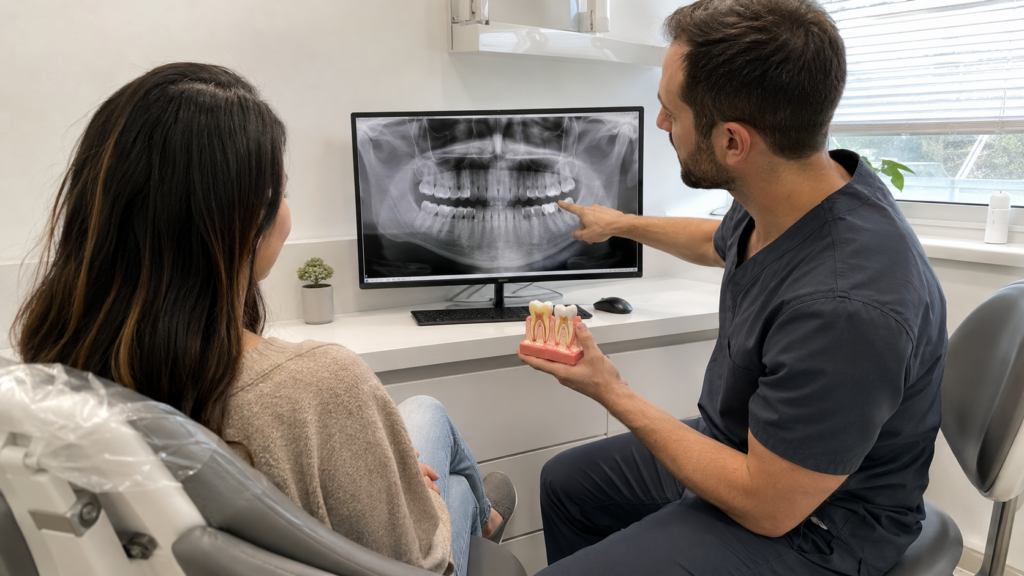
The First Question: Can the Tooth Be Restored?
Before choosing between root canal therapy and extraction, the dentist needs to determine whether keeping the tooth is a reasonable treatment goal.
The evaluation may include:
- How much healthy tooth structure remains
- The extent of decay or damage
- The condition of the pulp inside the tooth
- Whether cracks or fractures are present
- The health of the gums and supporting bone
- Whether the tooth can be appropriately restored afterward
- How the tooth needs to function
This is why two people with similar symptoms can receive different treatment recommendations.
The objective is not simply to preserve every natural tooth regardless of its condition. The dentist needs to determine whether treatment can leave the tooth in a condition that can reasonably function and be maintained.
When Might Root Canal Therapy Be Considered?
Root canal therapy may be considered when the pulp inside a tooth is significantly inflamed or infected but enough healthy tooth structure and support remain for continued restoration.
The procedure addresses the internal condition of the tooth.
It does not rebuild structure that has already been lost, so the dentist also needs to think about how the tooth will be restored afterward.
That distinction matters.
A root canal is not simply a procedure used to avoid extraction. It is one treatment option when the tooth remains suitable for restoration and continued use.
Root canal therapy is a confirmed service at Dental Professionals of Dardenne.
When Might Tooth Extraction Be Considered?
Tooth extractions may be considered when a tooth cannot reasonably be restored or maintained.
For example, significant structural loss, certain severe fractures, or extensive damage may leave too little healthy tooth structure for an appropriate restoration.
The surrounding tissues can also affect the recommendation.
If the supporting bone or gums have been significantly compromised, the dentist may need to consider whether the tooth has enough support to remain functional over time.
An extraction recommendation does not mean that removing teeth is automatically preferred.
It means the findings suggest that maintaining that particular tooth may no longer be the most reasonable treatment path.
Tooth extractions are also confirmed within the practice’s service offerings.
Is a Root Canal Always Better Than an Extraction?
No.
Preserving a natural tooth can be an important goal when the tooth is suitable for treatment.
However, trying to keep a severely compromised tooth simply because it is natural is not always the appropriate choice.
Extraction should not automatically be selected simply because it removes the immediate problem either.
Instead of asking:
“Which procedure is better?”
A more useful question is:
“Which treatment makes sense for this particular tooth?”
The answer depends on what the examination shows and whether the tooth can reasonably be restored and maintained.
Does Pain Determine the Decision?
Pain can provide important information, but it does not determine the treatment by itself.
A painful tooth may have inflammation, infection, decay, a crack, or another concern.
Another tooth may have significant structural damage without producing severe pain.
Symptoms help your dentist understand what you are experiencing. The examination and diagnostic findings help determine what is causing those symptoms.
That is why severe pain does not automatically mean a root canal is necessary, and limited pain does not automatically mean a tooth can safely be left untreated.
What Factors Determine Whether a Tooth Can Be Saved?
Several factors can influence whether a dentist recommends trying to preserve a tooth or considers extraction.
Remaining Tooth Structure
A root canal treats the inside of the tooth, but it cannot replace tooth structure that has already been lost.
The dentist needs to determine whether enough healthy structure remains to support an appropriate restoration.
Cracks and Fractures
Not every cracked tooth has the same outlook.
The location, depth, direction, and extent of a crack can affect whether the tooth remains suitable for restoration.
A limited crack may require a different approach from a fracture that substantially compromises the tooth.
Extent of Decay
Decay can reduce the amount of sound tooth structure available for restoration.
Some teeth with significant decay may still be treatable. In other cases, enough structure may have been lost that extraction becomes a reasonable consideration.
Condition of the Dental Pulp
If the pulp is significantly inflamed or infected, root canal therapy may become part of the treatment plan when the rest of the tooth remains suitable for restoration.
Gums and Supporting Bone
A tooth depends on the tissues around it for support.
Significant problems involving the gums or supporting bone may therefore affect whether maintaining the tooth makes sense over the longer term.
Function
The dentist also considers how the tooth needs to function.
Its position, chewing demands, surrounding teeth, and role within the overall treatment plan may all influence the recommendation.
No single factor determines the answer for every tooth.
What Happens After the Decision Is Made?
If root canal therapy is recommended, treatment of the pulp may be followed by restorative care depending on how much tooth structure remains.
For some teeth, dental crowns may be part of the restorative discussion when broader coverage or support is appropriate.
That does not mean every root canal-treated tooth automatically needs the same restoration. The recommendation depends on the individual tooth.
If extraction is recommended, the immediate goal is addressing a tooth that cannot reasonably be maintained.
The dentist can then discuss whether replacing the missing tooth is appropriate.
Options may vary depending on which tooth was removed, surrounding oral health, anatomy, and the patient’s goals. Dental implants are one confirmed treatment option available at Dental Professionals of Dardenne, but implant treatment is not automatically appropriate after every extraction.
Tooth replacement is therefore a separate decision from whether the original tooth needs to be removed.
What Questions Should You Ask Your Dentist?
If significant treatment is recommended, you should feel comfortable asking why.
Useful questions include:
- Can this tooth reasonably be restored?
- How much healthy tooth structure remains?
- What is causing the problem?
- Why are you recommending root canal therapy?
- Why are you recommending extraction?
- Are there other appropriate options?
- What restoration might be needed after a root canal?
- What happens if the tooth is removed?
- Would the missing tooth need to be replaced?
- How does each option fit into my broader treatment plan?
Understanding the reasoning behind the recommendation can help you participate in the decision rather than simply choosing between two procedure names.
Why the Right Choice Is Different for Every Tooth
Root canal therapy and tooth extraction address different clinical situations, and neither is automatically the correct answer for every damaged or infected tooth.
A root canal may be considered when the internal problem can be treated and enough healthy structure and support remain for continued restoration.
Extraction may be more appropriate when damage, structural loss, supporting-tissue concerns, or other findings mean the tooth cannot reasonably be maintained.
The decision can depend on:
- Remaining tooth structure
- Decay
- Cracks or fractures
- Pulp condition
- Gum and bone support
- Function
- Overall oral health
A thoughtful treatment recommendation considers both the immediate dental problem and the role the tooth can realistically play in the patient’s long-term oral health.
Get a Clear Explanation Before You Decide
Being told that a tooth needs significant treatment can feel like a major decision.
It is reasonable to ask why one treatment is being recommended over another and what findings led to that recommendation.
Dental Professionals of Dardenne emphasizes individualized care, patient education, comfort, and helping patients take an active role in their dental decisions.
If you have questions about whether a damaged tooth may be treated or needs to be removed, contact Dental Professionals of Dardenne to schedule an evaluation and discuss your options.