
A front tooth that looks a little short and one with a slightly longer edge can both make your smile look uneven. Yet the two teeth may call for different changes. Dental bonding adds tooth-colored material to build up part of a tooth. Cosmetic contouring removes a small amount of enamel to change its outline.
If one edge needs more length or fullness, a dentist may consider bonding. If a healthy tooth has a slightly prominent edge or pointed corner, contouring may be an option. The decision comes down to what is creating the uneven look and what the tooth and bite can safely accommodate.
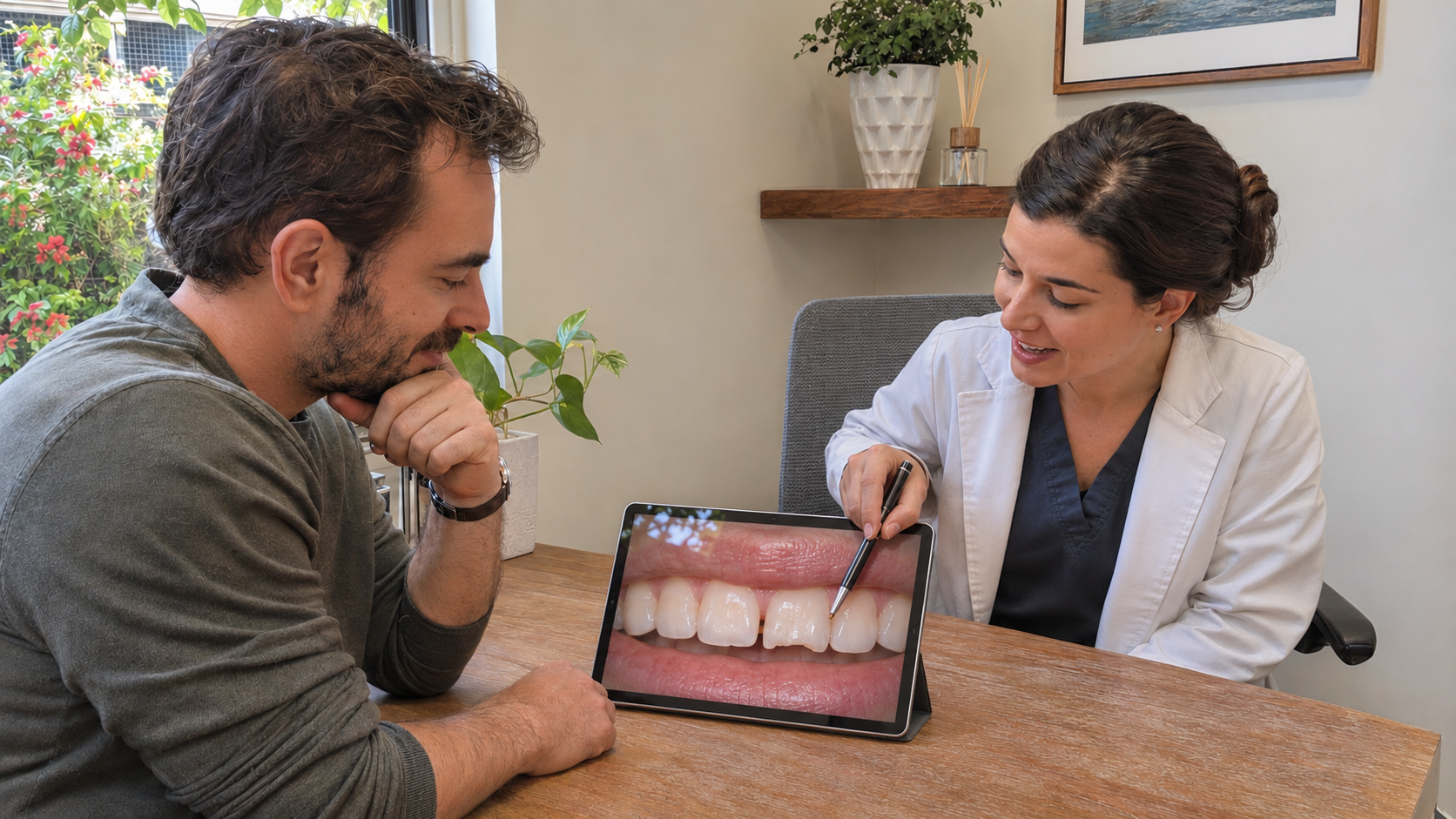
Dental Bonding vs. Cosmetic Contouring at a Glance
| What to compare | Dental bonding | Cosmetic contouring |
| How it changes the shape | Adds tooth-colored composite resin. | Removes a small amount of the tooth’s outer enamel. |
| What it may help with | A small missing corner, a tooth that looks undersized, or a narrow gap in selected cases. | A slightly long edge, pointed corner, or small irregularity that can be smoothed safely. |
| What to know long term | The resin may stain, chip, or need repair over time. | Removed enamel does not grow back. |
When Would a Dentist Use Bonding?
With dental bonding, the dentist selects a resin shade to blend with your tooth and prepares the surface so the resin can stick. Cosmetic bonding typically requires little or no removal of natural tooth structure. The dentist adds the resin where more shape is needed, hardens it with a curing light, then polishes it and checks how your teeth come together.
For example, you might have a front tooth that looks narrower than the one on the other side. Adding a little resin can make the tooth look fuller. If you have a small space, bonding may close or reduce it in some cases. The dentist will first check whether widening the teeth would leave them looking balanced and whether the space is related to tooth position. Adding resin changes the tooth’s outline; it does not move the tooth.
It’s also worth asking what everyday wear would mean for the area. Resin added along a biting edge may be under more pressure if you clench, grind, or bite your nails. Your dentist can explain how those habits affect the plan and what to do if the bonding chips or starts to feel rough.
When Would a Dentist Use Cosmetic Contouring?
Cosmetic contouring, also called tooth reshaping or enameloplasty, changes a tooth’s outline by removing a small amount of its hard outer layer. A dentist may use it to soften a pointed corner or smooth an irregular edge when there is enough healthy enamel to make the change safely. The dentist checks the bite to see how reshaping the edge would affect contact with the opposing teeth.
Since enamel does not grow back, the dentist plans how much can be removed before recommending treatment. If a tooth is already worn or the adjustment would require removing too much enamel, the dentist may suggest a different approach or leaving the tooth as it is. Contouring changes the shape of a tooth; it doesn’t move teeth or reshape the gumline.
What If Two Teeth Look Uneven?
Suppose you notice one front tooth looks shorter in photos. The difference might come from a worn or missing corner on that tooth, or from a slightly prominent corner on its neighbor. Building up the shorter tooth might make sense in the first case. Smoothing a small part of the neighboring tooth might make sense in the second, if that tooth has enough enamel and the bite allows it.
The difference may also come from the way the teeth sit or how much tooth the gumline shows. Adding resin or reshaping an edge may do little to address those causes. If the shorter tooth is worn, your dentist may want to understand why it is wearing before changing its shape. That’s why an examination is more useful than choosing a procedure from a photo alone.
What Will Your Dentist Check First?
Start by showing your dentist the exact spot you notice. Is it a corner that catches your eye in photos, the length of an edge, or a space between two teeth? A specific example gives your dentist a clearer starting point and helps you agree on what you want to change.
At the visit, your dentist may consider:
- Tooth shape and enamel. Is there enough healthy enamel to smooth a small area, or would the tooth benefit from adding material?
- Your bite. Do the teeth touch where resin would be added or enamel would be reshaped? Do you show signs of wear or grinding?
- Tooth and gum health. Is there decay, a crack, or another concern that needs attention first?
- The size of the change. Would a small adjustment help, or is the result you want more closely related to alignment or tooth position?
If you’ve noticed pain, new sensitivity, or a recent injury, tell your dentist before discussing cosmetic changes. A tiny rough spot and a painful chip can look similar at first, but they call for different evaluations.
FAQs
Can bonding and contouring be used together?
Sometimes. A dentist may recommend smoothing a small, prominent area and adding resin where another area needs more shape. Ask what each step would change and whether one treatment alone would meet your goal.
Is cosmetic contouring permanent?
Yes. The enamel removed during contouring does not grow back. Before deciding, ask your dentist to point out where enamel would be removed and explain how much of a change you can reasonably expect.
Can I whiten a tooth after it has been bonded?
Whitening products can lighten natural teeth, but the composite resin won’t lighten the same way. If you’re considering both treatments, tell your dentist in advance so you can discuss timing and how the resin shade will blend with nearby teeth.
Do I have to change a slightly uneven tooth?
No. If the tooth is healthy and the difference is cosmetic, leaving it alone is a reasonable option. If the shape changed recently or the edge feels rough, catches when you bite, or becomes sensitive, ask your dentist to check it.
If there’s one small change you’d like to make, schedule a cosmetic consultation with Dental Professionals of Dardenne in Dardenne Prairie, Missouri. Show us the area you notice, and we’ll talk through whether bonding, contouring, or leaving the tooth as it is makes sense for you.